T20 World Cup: ‘She’s been threatening for a long time’ – Australia’s depth delivers as Wareham shines

Australia’s Depth Shines as Wareham Delivers in T20 World Cup
Australia’s enviable depth has proven to be a critical asset in the ongoing T20 World Cup, providing the team with a robust platform for the tournament’s crucial latter stages. The squad’s ability to call upon multiple high-calibre players has been evident, particularly with recent injuries and precautionary measures.
The team has navigated early challenges, including Phoebe Litchfield’s quad injury, which forced her to miss the dominant 98-run victory over Netherlands in Southampton and is expected to sideline her for the upcoming fixture against Pakistan at Headingley. Furthermore, wicket-keeping duties against Netherlands were handled by Georgia Voll as Beth Mooney cautiously retired hurt on 74 due to back tightness, a move described by Australia as purely precautionary. Adding to the display of resilience, Ash Gardner bounced back with an impressive half-century after missing the nine-wicket win over Bangladesh due to a sprained ankle.
Wareham’s Explosive Form Bolsters Middle Order
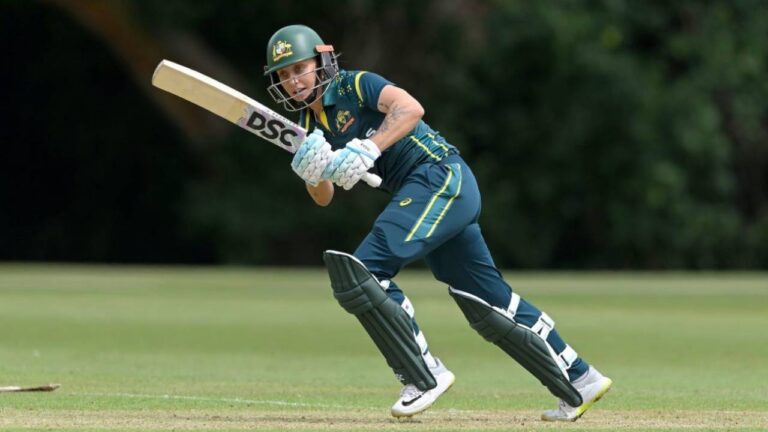
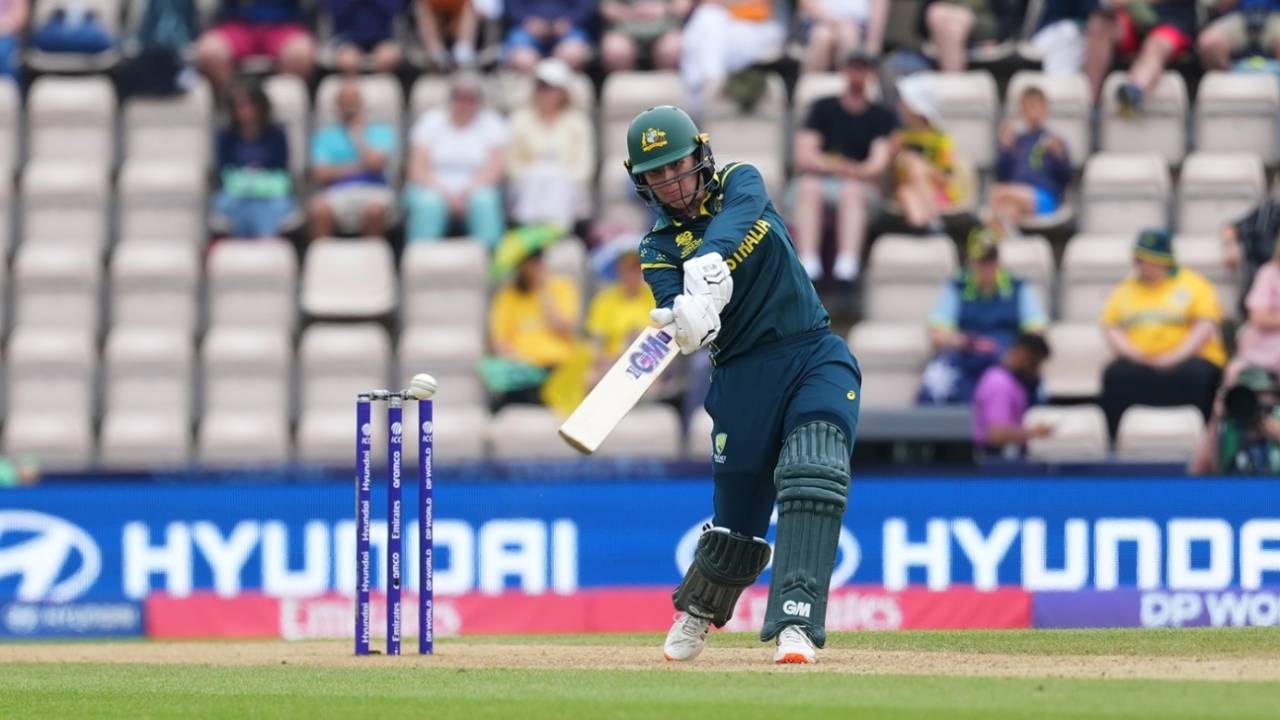
Amidst these shifts, all-rounder Georgia Wareham has consistently bolstered Australia’s middle order with her exceptional performances. Her contributions have been nothing short of spectacular, scoring a boundary-laden 32 in the opening-match victory against South Africa, where she also claimed 3 for 13, standing out in a spin-heavy attack. She followed this up with an explosive 41 off just 18 deliveries against Netherlands, propelling her to become Australia’s second-highest run-scorer in the tournament thus far, only behind Beth Mooney.
Wareham’s recent form is not an anomaly; her talent has been evident for some time. She was named Player of the Tournament at the last WBBL season, concluding her campaign for Melbourne Renegades as the competition’s leading wicket-taker with 19 wickets at an average of 10.94 and an economy of 5.47. Her batting prowess was equally impressive, accumulating 277 runs in the middle order at an average of 39.57 and a remarkable strike rate of 147.34. Additionally, Wareham enjoyed a successful ODI series in the Caribbean in March, earning two Player-of-the-Match awards and showcasing a superior strike rate.
Australia’s head coach, Shelley Nitschke, has long recognized Wareham’s potential. Nitschke commented, “It’s probably not surprising to any of us that see Wolfie [Wareham] go about her work day in, day out. She’s probably been threatening with the bat for a long time. We all know what she’s capable of. She’s had a really good 12 months and was excellent again [against Netherlands]. She’s playing a really critical role there for us through the middle.”
Nitschke further emphasized the team’s depth: “We always talk about our depth, and I think we’ve had to test that a little bit at times, and it’s been really good to see people step up and have a winning innings or just take control of the game as well.”
Navigating a Gruelling Schedule and Player Management
Australia has faced a gruelling travel schedule throughout this World Cup, commencing their campaign in Manchester before moving to Leeds, then traversing the length of the country to Southampton, and subsequently returning to Leeds by coach. This extensive travel has taken its toll, with Mooney attributing her back soreness to prolonged periods spent on the road.
The coaching staff’s approach to player management has been meticulous. “We know how important she is to us and just when she started getting some tightness in her back, it wasn’t worth risking her,” Nitschke explained regarding Mooney’s precautionary retirement. “She plays a big role for us with the gloves as well, so there is an element of precaution at times. In a World Cup you’ve just got to weigh everything up and work out what’s worth the risk and what’s not worth the risk.”
With three wins from three matches and a final group-stage game against India at Lord’s on Sunday, Australia can afford to be strategic and calculated in their risk-taking at this juncture of the tournament.
Pakistan’s Struggles and Sana’s Standout Efforts
In stark contrast to Australia’s commanding position, their upcoming opponents, Pakistan, have not enjoyed the same luxury. Pakistan is yet to record a victory in the tournament, having suffered defeats in their opening match to India and against Bangladesh on Sunday. Despite these struggles, Fatima Sana has emerged as a beacon of hope for her team.
Sana’s exceptional all-round performance against South Africa saw her score an unbeaten 55 off 38 balls and claim 3 for 16 in 2.5 overs, sending a significant scare through the Proteas’ camp before Marizanne Kapp’s all-round effort secured a two-wicket victory for South Africa. Sana’s efforts have not gone unnoticed by the Australian side.
Coach Nitschke acknowledged Sana’s impact, stating, “She’s been outstanding. Since she’s stepped into the captaincy role, she’s really grown as an allrounder and one of the world’s best at T20 cricket. We haven’t had a chance to get our plans ready. We’ve got a five-hour bus trip, so there’s a bit of an opportunity for us to have a look at that. But we certainly know that she’s the sort of player we need to be well planned for and be able to execute against her because she’s showing that she can take a game away from a team.”
Learning from Mistakes: Pakistan’s Quest for Rectification
Following their recent defeat to Bangladesh, Pakistan coach Wahab Riaz lamented that his side had “defeated themselves.” The team squandered a promising position, collapsing from 70 for 2 in the 12th over to end on 100 for 8 while chasing 124, effectively ruining their already slim chances of progressing to the knockouts.
On the eve of their encounter with Australia, Pakistan opener Muneeba Ali expressed her team’s determination to “rectify the mistakes we have been making in the last three games.” She reflected on a past encounter where Australia had Pakistan 76 for 7 at last year’s 50-over World Cup before winning by 107 runs, bowling Pakistan out for 114 while chasing 222.
Ali pinpointed key lessons from the Bangladesh loss: “When I was settled in, I should probably have finished that match, but unfortunately when wickets fall we have a cluster of wickets in the last three games. That is the main thing we need to rectify and identify what we were doing in those situations. Are we not taking good, right decisions mentally in those pressure times? That is what we have talked about and we will try to rectify.” As Australia continues its dominant run, Pakistan faces a formidable challenge, aiming to implement these crucial lessons against one of the tournament’s strongest contenders.