
Big picture – Sri Lanka well behind West Indies in T20 quality
The opening T20I followed an all-too-familiar script for Sri Lanka. Heavy scoring at the top giving way to middle order brittleness and a late salvage job. Only this time, not even that script went the way it was supposed to against West Indies.
While Kusal Mendis gave Sri Lanka the high-octane start they desired, the loss of four top-order batters before the halfway point of the innings meant the remaining members of a truncated batting line-up – owing to Sri Lanka’s aggressive 6-5 combination – had to shelve any attacking ambitions and prioritise consolidation. Stuttering through a 25-run death-overs period told a story.
Form guide
West Indies WLLWW (last five completed games, most recent first)
Sri Lanka LLLLL
If one were to seek out silver linings, however, the manner of Sri Lanka’s dismissals could at the very least not be put down to a lack of intent. Head coach Gary Kirsten has spoken openly of his preference for process over immediate results, and while that might be a tricky balancing act in the short-term, it could still reap rich dividends in the not-so-distant future.
In the spotlight – Jason Holder and Kamindu Mendis
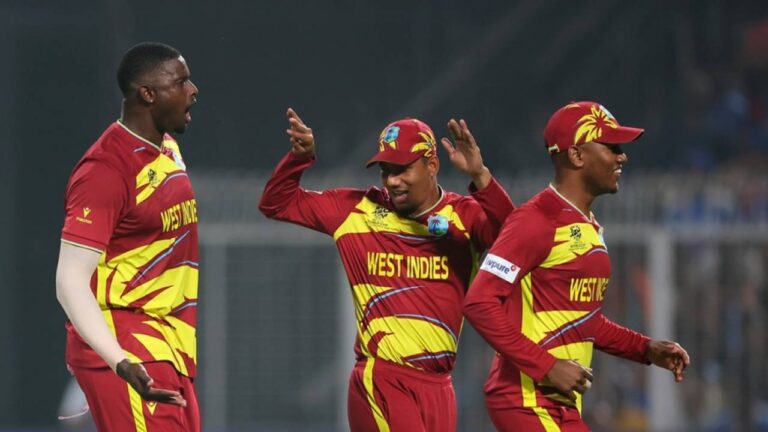
Jason Holder showed why his experience is crucial to this balanced West Indies unit. He broke the back of Sri Lanka’s top order, which in turn dictated the tempo of the entire innings. With the pitches in Kingston, where all the matches are being played, showing some wear and patchy grass, Holder’s subtle variations and cutters could be a major threat once again.
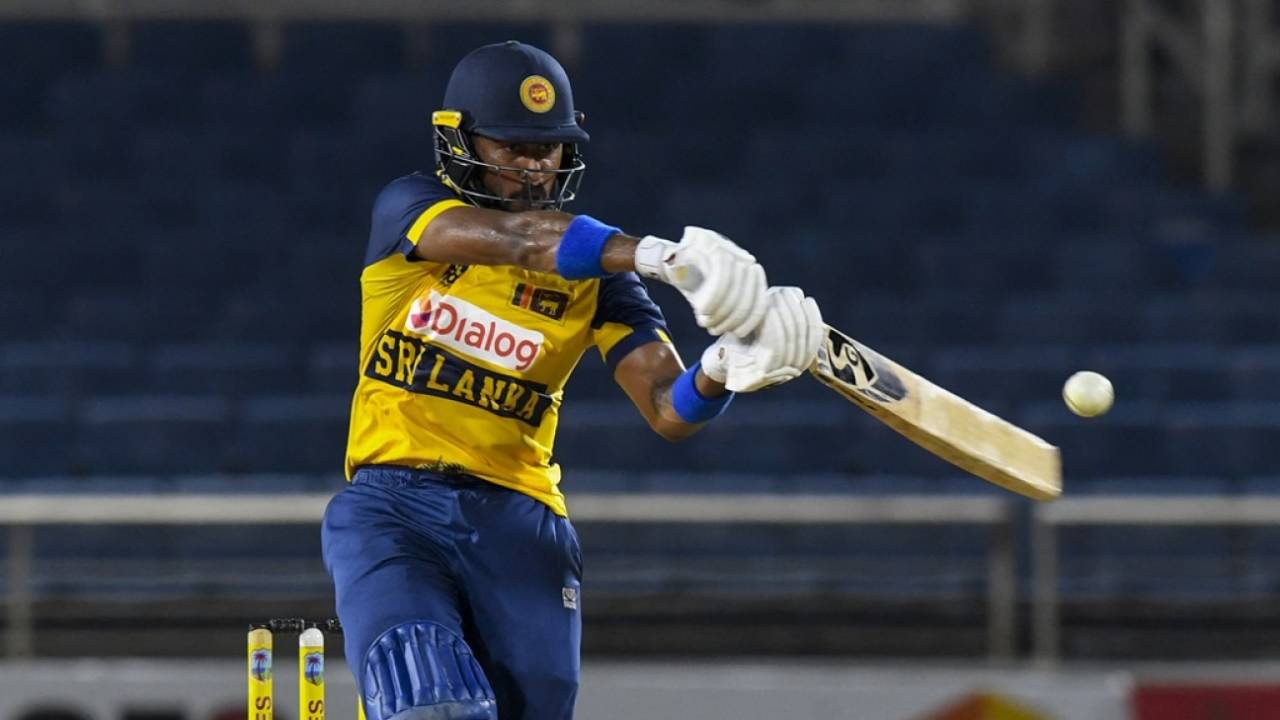
Kamindu Mendis was a rare bright spot in Sri Lanka’s underwhelming scorecard, fighting through for a 39-ball 51. His ability to counter pace and spin alike makes him central to Sri Lanka’s plans. The management also seems to trust him to handle tricky scenarios, pitched recently as an ODI opener and now increasingly as a middle-order firefighter-cum-enforcer. However, he drastically needs support from those around him if Sri Lanka want to lay down a platform capable of challenging the hosts.
Team news – Will Dunith Wellalage come in?
West Indies XI (probable): 1 Shai Hope (capt, wk), 2 Brandon King, 3 Shimron Hetmyer, 4 Roston Chase, 5 Sherfane Rutherford, 6 Rovman Powell, 7 Jason Holder, 8 Romario Shepherd, 9 Matthew Forde, 10 Akeal Hosein, 11 Shamar Joseph
Sri Lanka XI (probable): 1 Pathum Nissanka, 2 Kusal Mendis (capt, wk), 3 Lasith Croospulle/Dunith Wellalage, 4 Pavan Rathnayake, 5 Kamindu Mendis, 6 Dasun Shanaka, 7 Wanindu Hasaranga, 8 Dilshan Madushanka/Dunith Wellalage 9 Maheesh Theekshana, 10 Dushmantha Chameera, 11 Eshan Malinga
Pitch and conditions
Sabina Park offered decent bounce and carry in the series opener, though the surface looked a bit patchy. The track for the second match is expected to be slightly slower, potentially giving Sri Lanka’s frontline spinners a larger say in the game. The weather forecast for Kingston also looks mostly clear for a (hopefully) uninterrupted evening clash.
Stats and trivia
- Wanindu Hasaranga has 18 wickets against West Indies in T20Is making him the fifth-highest wicket-taker against them. None of the bowlers above him better his strike rate of 11.6. Three more wickets will see him go joint-third, five more joint-second – but still a distance away from Adil Rashid’s 42.
- Sri Lanka have won ten and lost nine of their T20Is against West Indies, but only two of those wins have come on West Indian soil.
- Sri Lanka have lost each of their last five T20Is, making this their leanest patch in the format since the first half of 2022. The last time they lost more than five in a row (eight) was in 2017; there was a string of eight losses between October 2019 and March 2021, but that was broken up by a solitary rain-abandoned fixture.