

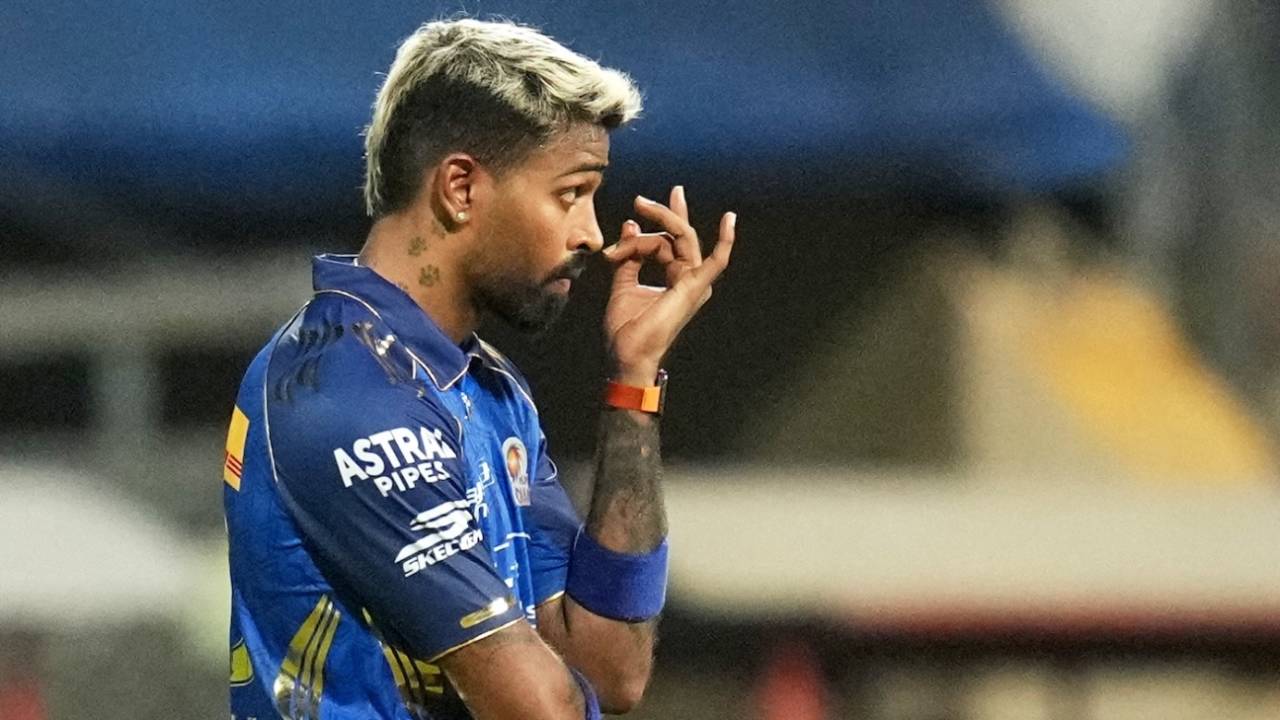
The Tale of Two Hardiks
In the landscape of modern cricket, few players command as much attention or stir as much debate as Hardik Pandya. He is widely regarded as a cornerstone of the Indian T20 side, a player trusted to bowl the most challenging overs and execute momentum-shifting knocks when the stakes are at their highest. Yet, since his return to the Mumbai Indians (MI) in 2024, his aura and output in the IPL have shown a puzzling decline that stands in sharp contrast to his international brilliance.
Comparing the Data: A Tale of Two Versions
The numbers paint a clear, albeit confusing, picture. In the ongoing IPL season, Hardik has struggled to find his rhythm, managing just 97 runs in six innings at a strike rate of 140.57, while his bowling impact has been limited to only three wickets in 15 overs. Compare this to his 2024 and 2025 international form, where he has been a pillar for India, racking up 286 runs in 12 T20I innings at a blistering strike rate of 165.31, alongside 13 crucial wickets.
Hardik’s reputation as a “clutch” player is built on his international performances. Whether it was his disciplined penultimate over against England in the 2026 T20 World Cup semi-final or holding his nerve in the 20th over of the 2024 final against South Africa, he has consistently proven he can handle the heat. In fact, since the beginning of 2026, he has been a death-overs specialist for India, maintaining an economy rate of 9.7. In the current IPL, that confidence appears to have vanished, with his death-over usage dropping significantly.
The Tactical Shift and MI’s Struggles
The reluctance to step up during high-pressure moments was starkly visible in the match against Chennai Super Kings at Wankhede. After being hit for 38 runs in his opening two overs, Hardik shied away from the death overs, opting to hand the ball to an inexperienced Krish Bhagat. The result was a costly 207-run target set by CSK. While Head Coach Mahela Jayawardene suggested this was an opportunity for youth, it raised questions about the captain’s own tactical trust and confidence levels.
The Pattern of Decline
This is not merely a short-term slump. Looking back at his tenure with the Gujarat Titans (GT) from 2022 to 2023, Hardik was a different player. He led his team with an average of nearly 38 over 30 innings. Since rejoining MI, his batting average has plummeted to 20.65. While his strike rate has improved as he shifted into a pure finisher’s role, his bowling economy has ballooned to 10.7, making him one of the most expensive bowlers in the league during this period.
Is it the Environment?
Why does he look so comfortable in the Indian jersey but lost in the blue of Mumbai? It may be the immense weight of expectation in a star-studded dressing room, the stresses of captaincy, or the lack of a settled playing XI at MI. Despite flashes of brilliance—such as his contribution against Kolkata Knight Riders—he has struggled to complete his full quota of four overs, leaving a gap in MI’s bowling attack.
Jayawardene remains defensive, noting, “I don’t think his form is a concern… overall as a unit we haven’t been consistent.” However, for MI to rescue their season, the team may need to unlock the version of Hardik Pandya that consistently delivers for India. Until that happens, his IPL form will remain one of the most significant mysteries of the 2026 season.