Abu Dhabi Government Acquires Majority Stake in T10 League: A New Era for Cricket

Franchise cricket has undeniably reshaped the global cricketing landscape in recent years, offering platforms for talent from across the world and bringing innovative formats to the forefront. While T20 leagues have become a staple in most cricketing nations, a groundbreaking innovation emerged from the United Arab Emirates in 2017: the launch of the first major T10 league, initially known as the T10 League, now globally recognized as the Abu Dhabi T10 League.
This year, the Abu Dhabi T10 is poised to host its 10th edition, a momentous occasion that underscores the league’s remarkable endurance and its consistent ability to attract a star-studded roster of both current international players and seasoned veterans. As the tournament approaches this significant milestone, its organizers have taken a bold strategic step, ensuring a robust future by bringing the government on board.
Abu Dhabi Government Enters the Realm of Cricket Ownership
In a move set to redefine the future trajectory of the league, the Abu Dhabi T10 League, founded and previously owned by TTEN Sports’ Shaji Ul Mulk, has officially sold a majority stake in the competition to the Abu Dhabi Sports Council. This acquisition signifies a substantial shift, granting the government significantly enhanced control over the league’s commercial direction, its potential for global expansion, and its overall governance. This pivotal involvement is expected to inject unprecedented levels of stability and strategic vision into the tournament.
The Evolution of a Pioneering Format
The journey of the Abu Dhabi T10 began modestly in 2017, with its inaugural matches hosted in Sharjah. The format, characterized by its rapid pace and television-friendly duration, was initially designed to appeal to younger audiences and those seeking quick, high-octane cricketing action. Following its immediate success and burgeoning popularity, the league expanded its footprint to Dubai in subsequent years, broadening its reach within the Emirates.
A critical turning point arrived in 2019 when Shaji Ul Mulk and his team secured an exclusive agreement for Abu Dhabi to host the tournament. This strategic partnership led to the league’s rebranding as the Abu Dhabi T10, firmly embedding its identity with the emirate. This move not only provided a stable home for the competition but also aligned it with Abu Dhabi’s broader vision of becoming a global hub for major sporting events.
A New Era Dawns for T10 Cricket
The Gulf countries have, in recent years, demonstrated an ambitious drive to become premier destinations for major international sporting events. This initiative, often fueled by substantial investments, reflects a broader strategy of economic diversification and the enhancement of global soft power. Against this backdrop, the Abu Dhabi government’s acquisition of a majority stake in the T10 League takes on even greater significance.
With the announcement of competing initiatives, such as the Dunes League T20 in Saudi Arabia, the Emirates Cricket Board-backed T10 league is strategically positioned for a period of considerable improvement and commercial ascendancy. The direct involvement of the government is anticipated to unlock new avenues for funding, marketing, and logistical support, which are crucial for any league aspiring to maintain its competitive edge. We can anticipate potential restructuring initiatives aimed at facilitating the league’s expansion, reinforcing its status as the most desirable cricketing destination in the Middle East.
Competitive Spirit and Star Power
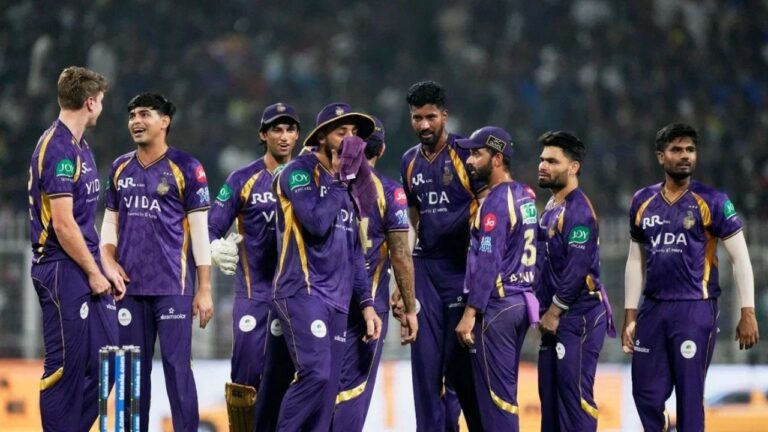
Over its nine seasons, the Abu Dhabi T10 has continuously evolved, embracing multiple changes in team ownership and introducing new franchises since its inaugural edition. These dynamic shifts have fostered a highly competitive environment, culminating in a refined playoff model that ensures thrilling finales. The league’s brand value is unequivocally demonstrated by the caliber of global stars who have graced its pitches and led its teams. Players such as Moeen Ali, Nicholas Pooran, Faf du Plessis, and Liam Livingstone are just a few of the prominent names who have lent their significant talent and leadership to the tournament, captivating audiences worldwide.
Statistically, the league has seen formidable performances. The Deccan Gladiators stand out as the most successful franchise, having clinched three titles so far. Individually, KKR star Rovman Powell leads the batting charts with an impressive 1346 runs, showcasing his explosive power in the format. On the bowling front, Afghanistan’s leg-spinner Qais Ahmad has been a consistent wicket-taker, topping the charts with 40 wickets.
Is T10 the Future of Cricket?
Since its inception in the Emirates, designed to provide crucial exposure to local youngsters while simultaneously attracting established global stars, the T10 format has inspired a proliferation of similar competitions worldwide. Boards that may not yet possess a robust T20 competition have eagerly replicated this short-format model, evidenced by leagues such as the Zim Afro T10 League. Europe has also embraced its own T10 competitions, and Sri Lanka joined this trend a couple of years ago with the Lanka T10 Super League.
While T20 remains the undisputed king of white-ball formats, holding immense popularity and featuring prominently on the international stage, the T10 format occupies a distinct and valuable niche. There is currently no international T10 format, and it is likely a considerable journey before it achieves the widespread popularity among regular cricket watchers and players that T20 commands. However, T10 has carved out a significant role, particularly as a major attraction for retired and out-of-favour international players. For these athletes, it offers an engaging platform to continue playing the sport they love, enjoy competitive cricket, and earn substantial remuneration in a less demanding format. Its rapid-fire nature also appeals to a demographic seeking quick entertainment, making it a viable addition to cricket’s diverse ecosystem, even if it primarily serves as a complementary rather than a dominant format for the foreseeable future.