Nitish Rana Dismissal Controversy: CSK vs DC Match Analysis & Rules Explained

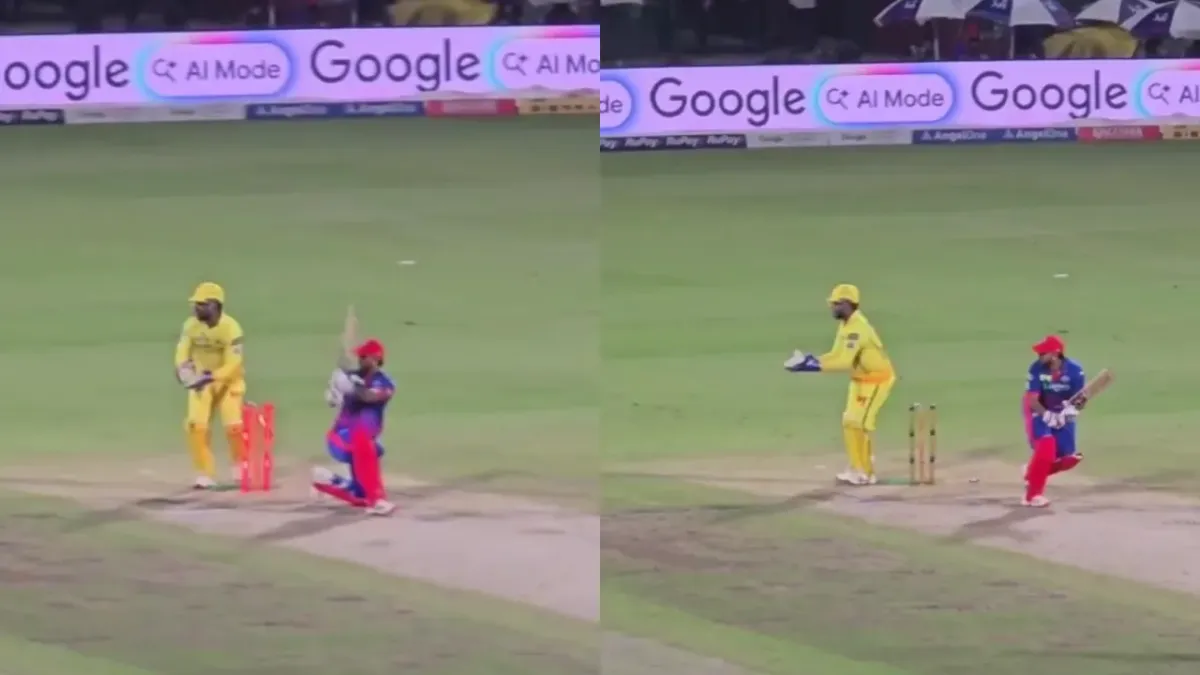
The ‘Ghost’ Dismissal: Nitish Rana’s Bizarre Exit Against CSK
The clash between Chennai Super Kings (CSK) and Delhi Capitals (DC) on Tuesday night was expected to be a high-octane affair, but it will likely be remembered more for a single, confusing moment of play than the final result. While CSK secured a comfortable eight-wicket victory, the dismissal of Delhi’s Nitish Rana has become the primary talking point among the cricketing fraternity.
Batting first after winning the toss, Delhi Capitals struggled to find their rhythm. They eventually posted a modest total of 155/7 in their 20 overs, failing to exert significant scoreboard pressure. However, the real drama unfolded during the tenth over of the DC innings, delivered by Noor Ahmad. On the third ball of the over, Rana attempted a sweep shot but mistimed it, leading to a simple catch for Kartik Sharma at fine-leg. At first glance, it seemed like a standard dismissal—until fans noticed something strange on the replays.
The Social Media Storm: Wind vs. Intervention
As soon as the dismissal occurred, social media was flooded with clips of the incident. One particular angle suggested that the bails had dislodged and fallen to the ground just as Rana was playing the shot, well before the catch was completed. This led to immediate speculation: Had wicketkeeper Sanju Samson accidentally clipped the stumps? Or was there some other interference?
One fan, posting under the handle @sinha7605, shared a video with the caption: “When Nitish got Out, Sanju Disturbed The Wicket and bail fell off. Any expert please tell will it be Out or not?”
However, subsequent high-definition footage shared by other users told a different story. In a second viral video, it became clear that neither Nitish Rana’s bat nor Sanju Samson’s gloves had come anywhere near the stumps. The bails seemed to fall entirely on their own, likely due to the strong, gusty winds prevalent in Delhi that evening. User @Riyalsteel noted, “Here is the proof – It IS the wind. Sanju made zero contact with stumps…”
Decoding the Law: Why It Wasn’t a Dead Ball
The central question arising from this incident is whether the umpires should have intervened and declared the delivery a ‘Dead Ball.’ To understand the decision, we must look at Rule 20 of the MCC Laws of Cricket, which governs the conditions under which a ball becomes dead.
- Settled Ball: The ball is considered dead when it is finally settled in the hands of the wicketkeeper or the bowler.
- Umpire’s Call: An umpire can call a dead ball if a batter is distracted by noise, movement, or interference (like a fan on the pitch) and pulls away from the delivery.
- Inanimate Objects: If a bail falls due to wind, it does not automatically render the ball dead unless it interferes with the batter’s ability to play the ball or occurs before the bowler has entered their delivery stride.
In Rana’s case, since the falling bail did not distract the batter or prevent him from completing his stroke, and the catch was taken cleanly, the dismissal was upheld. The umpires correctly identified that the integrity of the play remained intact, despite the ‘ghostly’ movement of the bails.
CSK’s Clinical Chase: Sanju Samson Leads the Way
While the Rana controversy dominated the headlines, the actual match saw a professional performance from Chennai Super Kings. Chasing 156 for victory, CSK did face some early jitters. Skipper Ruturaj Gaikwad was dismissed cheaply for just 6 runs, caught by Sameer Rizvi off the bowling of the returning Lungi Ngidi.
The pressure mounted slightly when Urvil Patel was sent back to the dugout for 17, courtesy of a brilliant piece of stumping by KL Rahul off Axar Patel’s bowling. With the score at 45/2 in the seventh over, the game hung in the balance. However, that was as good as it got for Delhi Capitals.
Samson and Sharma Seal the Win
Sanju Samson, playing with remarkable composure and aggression, took control of the chase. He found an able partner in Kartik Sharma, and together the pair dismantled the Delhi bowling attack. Samson was particularly devastating, finishing unbeaten on 87 runs from just 52 balls, a knock that included seven boundaries and six towering sixes.
Kartik Sharma played the perfect supporting role, finishing with 41 runs off 31 balls. He fittingly hit the winning boundary to secure the two points for CSK. The eight-wicket win marks CSK’s second consecutive victory, propelling them further up the table and leaving DC to rue both their low total and the unlucky nature of Rana’s departure.
Final Thoughts
In a sport often decided by the narrowest of margins, the Nitish Rana incident serves as a reminder of the complexities of cricket’s laws. While the wind may have played a trick on the bails, the rules were applied correctly, ensuring that the skill of the bowler and fielder was rewarded. For CSK, the focus remains on their winning momentum, while DC must find a way to add more substance to their middle-order batting if they hope to bounce back in the tournament.